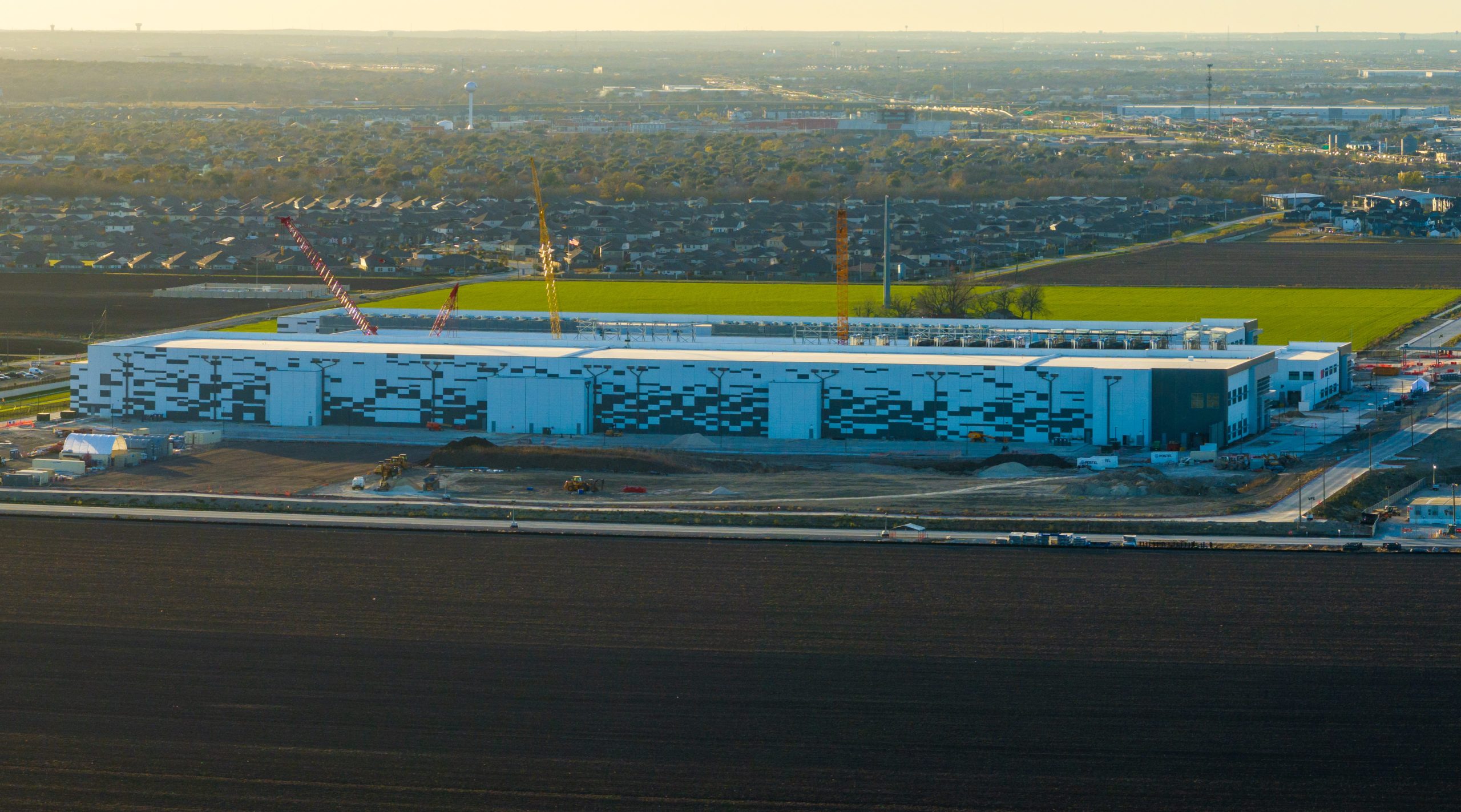
When it comes to hotspots for data center construction, there’s no contest: Dallas-Fort Worth is the #1 market in the world, per a Cushman Wakefield report. We've seen announcements of billions of dollars in investments in our city, with DataBank alone representing $1.45 billion in new financing.
With these investments comes a strong urgency to keep building projects moving forward to stay ahead in the AI race. Which means these companies are desperate for skilled tradespeople, like construction workers, HVAC, plumbers, and electricians. Given the local shortages in these workers, they’re willing to use their large stashes of cash to outbid other employers. Based on our own hiring data, we're seeing:
- The average wage is now $32–$34/hour for most skilled trades roles
- For laborers, $24/hour is the floor
- By the end of the summer, we expect an increase of +$4-5/hour from what employers were paying in January
Even if you aren’t working on a data center project right now, this influx of cash has put you in a strong position. Because it’s forcing everyone to pay more for your labor. Which means you have a lot of bargaining power right now.
But here’s the catch: these high wages aren’t going to last forever. So yes, you can seize the opportunity now. But don’t shoot yourself in the foot by making short-sighted decisions. As someone who’s been in this market for nearly 85 years, here’s our advice on how to best approach this short-term boom without sacrificing your long-term career potential.
Key Takeaways
- The Dallas market’s higher wages for construction workers are driven almost solely by demand. DFW's data center boom is pushing skilled trades pay to $32-34/hour (and $2-4/hour higher than the start of the year), but that increase is tied to a construction surge that will eventually slow, not to workers gaining new skills or certifications.
- Chasing the highest hourly rate can hurt your career in the long term. Small, fast-moving data center projects pay top dollar because they're racing a deadline, but they'll also wrap up and disappear quickly, so jumping ship from a stable employer for a short-term bump carries real risk.
- If you're going to take a job for higher pay, do it in a smart way. Giving proper notice and weighing benefits, PTO, and holiday pay against a wage bump helps workers capture today's gains without damaging their long-term career prospects once the boom cools.
How Data Center Investments Are Driving Up Skilled Trades Wages Across the Board
Companies have announced billions upon billions in AI data center investments in the Dallas-Fort Worth area. But their ability to realize these investments depends entirely on access to dependable, consistent skilled tradespeople to work the construction sites. As such, the competition to land workers is high.
To give you a sense of the scale of the investments, here are some of the ones that have generated headlines:
| DataBank | $1.45 billion in new financing , including an $800 million revolver and $650 million for construction at its Red Oak campus south of Dallas. |
| Roughly $1 billion in Dallas-area spending this year , with reporting also saying its Texas investment total has reached $2.7 billion; the company is expanding campuses in Midlothian and Red Oak. | |
| Equinix | About $835 million for a west Dallas data center project known as DA12. |
| QTS Realty Trust | Roughly $290 million for a data center project south of Dallas. |
| Lincoln Property Co. + Gigabit Fiber + Tradition Holdings | A proposed $1 billion campus in Red Oak area build-out at full scale. |
| Provident Data Centers + PowerHouse Data Centers | A proposed $5 billion first phase for a hyperscale campus in Grand Prairie. |
While the tradespeople hired for those projects are the ones most immediately impacted (in a positive sense), the effects of these investments ripple out across the market:
- Pushing skilled trades wages upward, for both private and public projects
- Cost-of-living increases across the community
- Contractors’ fixed-price bids become obsolete when labor (the biggest line item on that bid) keeps going up; in other words, the longer a project takes, the more margin it eats up.
While there’s been a lot of discussion in the news about the wage hikes that data center workers are seeing, there’s much less discussion around the spillover effect that’s having on the rest of the market. But it’s just common sense: if one employer is paying significantly more than all others, everyone’s going to have to raise their wages just to compete.
That’s one of the reasons why we’ve published a Skilled Trades Wage Guide Addendum to accompany our 2026 wage guide. Based on our own internal compensation data, the wages we published at the beginning of the year are already $2/hour or more behind what’s being offered. That’s how quickly things are moving upward.
Don’t Mistake This Short-Term Boom for a Long-Term Advantage
Higher demand and higher wages naturally have given skilled trades workers a short-term advantage. You can easily go to a job site across the street and make $1-2 more per hour. Wait a couple of weeks, and you ditch that job for another $1-2 more per hour. By the end of the year, you’d have given yourself a $4-5 wage hike.
But unless you’re planning on retiring in the next two to three years, it’s important to balance your short-term advantage with your long-term career stability. And that’s a real risk people are running in this environment. Here are some reasons why.
Higher wages are demand-driven, not skill-driven.
Only one factor is driving wages up right now, and it’s not skills, certifications, training, or anything on your resume. It’s demand. And what goes up must, eventually, come down.
Right now, the main reason demand is high is because of the data center investments and their ripple effects. Eventually, those projects are going to come to fruition, in which case they won’t need workers anymore. Or, the government is going to step in and stop these projects from moving forward, in which case they definitely won’t need workers anymore.
Either way, the wages you command today are a blip. So sure, make smart moves to take advantage of it. But don’t act like it’s going to be that way forever, because it isn’t.
Balance consistent employers with top-dollar employers
Right now, the small and fast projects are paying top-dollar. But keep in mind the reason they’re paying so much: it’s because they have an aggressive build schedule and want to stick to it. Which means these projects will move fast, wrap up quickly, and suddenly you’ll be out of a job.
The bigger, more established construction companies (if you’re in this area, you know the names) that have been around for decades may not pay as much per hour. But they’re going to be around when the data center “gold rush” passes. You don’t want to be running to them for a job when you ditched their project just a few months ago.
A $2-4/hour hike may seem like you’re coming out ahead. But if it costs you a job in six months, it’s really not helping your bottom line all that much.
Don’t burn your bridges.
Let’s say you look at your situation and determine that, despite the long-term risk, it’s worth it to take one of these data center jobs and make some extra money. Then you should be asking: how do I take advantage of this situation without burning my bridges and hurting my career?
Because there’s a right way to do things, and a wrong way. For example, if you’re going to leave, at least give your employer two weeks so they can try and find a replacement. Same goes for leaving in the middle of a set contract period.
Always do the math.
An extra $2-4/hour doesn’t always mean you’ll come out ahead. It’s important to take stock of the total compensation of the two jobs. You’d be surprised how many people leave a job for higher wages, but leave holiday pay and PTO, benefits, and other perks on the table.
Final Thoughts on the Dallas-Area Construction Boom
Chasing some of these bigger data center projects and out-of-town per diem work may seem like it’s a smart choice. After all, $2-4/hour extra pay adds up, especially if you work overtime. But it could end up working against you if you don’t take into account the impact on your career over the long haul.
That’s not to say you shouldn’t take these jobs. Maybe you just wrapped up a contract and are ready for something new. In that case, go for it. But don’t move in a way that burns bridges and puts your future career at risk.
This employee’s market is eventually going to come to an end. The question you need to ask is: what will your situation be when it does?
Latest News